
Silk Mobile
Table of Contents (Homepage)
- Overview
- Setting Up
- Getting Started
- How To
- Connecting Devices And Emulators
- Preparing Applications For Testing
- Managing Applications
- Recording Tests
- Working With Test Commands
- Adding Commands To Your Scripts
- Object Commands
- Click
- ClickCoordinate
- ClickIn
- ClickOffset
- Drag
- ElementGetProperty
- ElementGetTableRowsCount
- ElementListPick
- ElementListSelect
- ElementListVisible
- ElementScrollToTableRow
- ElementSendText
- ElementSetProperty
- ElementSwipe
- ElementSwipeWhileNotFound
- GetAllValues
- GetElementCount
- GetElementCountIn
- GetTextIn
- IsElementBlank
- IsElementFound
- IsFoundIn
- LongClick
- RunNativeAPICall
- SendWhileNotFound
- VerifyElementFound
- VerifyElementNotFound
- VerifyIn
- WaitForElement
- WaitForElementToVanish
- GetCoordinateColor
- DragDrop
- Application Commands
- Device Commands
- Web (Hybrid) Specific Commands
- Utilities Commands
- Monitoring Commands
- Configuration Commands
- ExtractLanguageFiles
- SetDefaultClickDownTime
- SetDefaultTimeOut
- SetDefaultWebView
- SetDragStartDelay
- SetInKeyDelay
- SetKeyToKeyDelay
- SetLanguage
- SetLanguagePropertiesFile
- SetShowImageInReport
- SetShowPassImageInReport
- SetShowReport
- SetSpeed
- SetThrowExceptionOnFail
- SetWebAutoScroll
- StartStepsGroup
- StopStepsGroup
- TextFilter
- Miscellaneous Commands
- Controlling Element Identification Rules
- Editing Test Objects
- Executing Test Scripts
- Report Of Executed Test
- Working From Code Environment
- Continuous Integration
- Layout Verification Tests
- Use Device Vitals Monitors
- Troubleshooting
- Terminology
ElementSetProperty
Note: Commands work only after application preparation.
ElementSetProperty(Zone, Element, Index, Property, Value)
|
|
|
|
|




Description
Designed command to sets value of a controller such as date pickers, sliders, switches etc..
Parameters
-
Zone - Select Zone
-
Element - Select Element (XPath is supported for the controller identifier)
-
Index - Element index
-
Property - Property (See below the supported properties)
-
Value - The value to be set
Supported properties:
NATIVE ZONE:
-
index: For pickers to selects the element in the provided index. The supported values are integers according to size of the picker
-
date: Works on Android and iOS date pickers to set the date value. The supported value format is dd.mm.yyyy: 12.09.2012
-
datetime: Works on iOS date time picker, to set the date and time value. The supported value format is dd.mm.yyyy hh.mm: 12.09.2012 13.05.
-
time: Works on Android or iOS time picker, to set the time value. The supported value format hh.mm:13.05
-
slide: Works on Android or iOS slider to set the slider value. You can set intervals like 0-10, 0-100, or 0-infinity.
-
text: Works on iOS picker to select specific text in the picker.
-
on: Works on Android and iOS switch to change the value. The supported value is boolean - true or false
-
placeholder: Works on iOS
-
checked: Works on Android or iOS check box. The supported value is boolean - true or false
WEB ZONE:
Property selection affects attributes of HTML elements. The inserted value is in javascript.
Note: String values are to be contained within quotation marks.
Usage
Scenario1: Date pickers
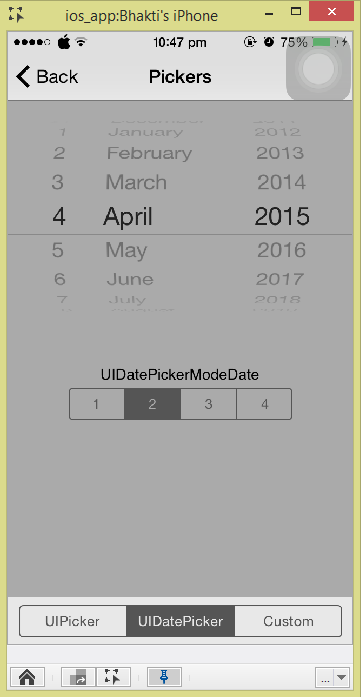
In the following example we will set a date to a picker using the UICatalog Test application.
Step 1: Get the picker's Native id.
How to find the picker's Native properties?
Usually it can be found behind its components properties:
-
Click on one of the picker's components.
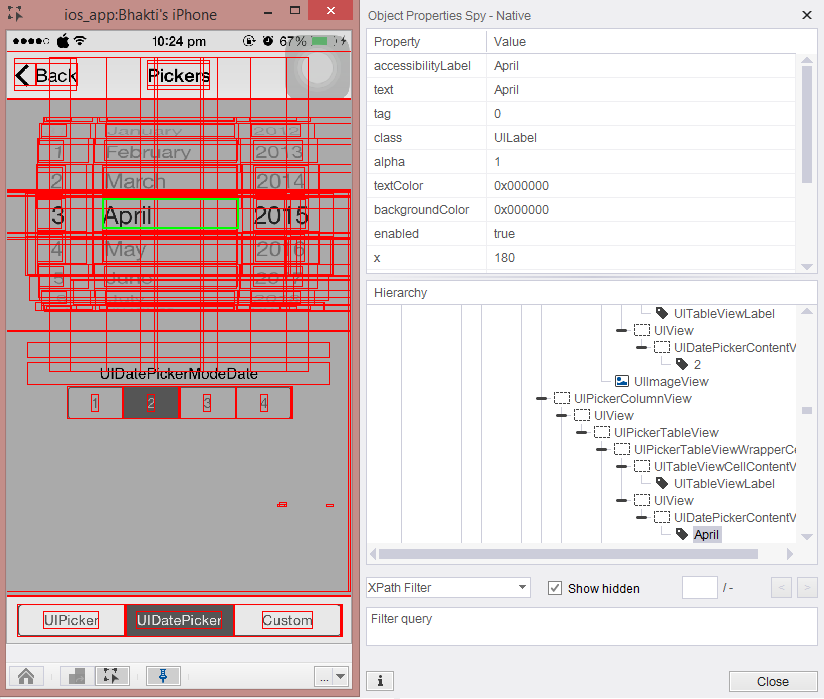
-
Right-click on the component then click on 'Ignore' - this will remove its properties from the screen, and will let you see what's behind it.
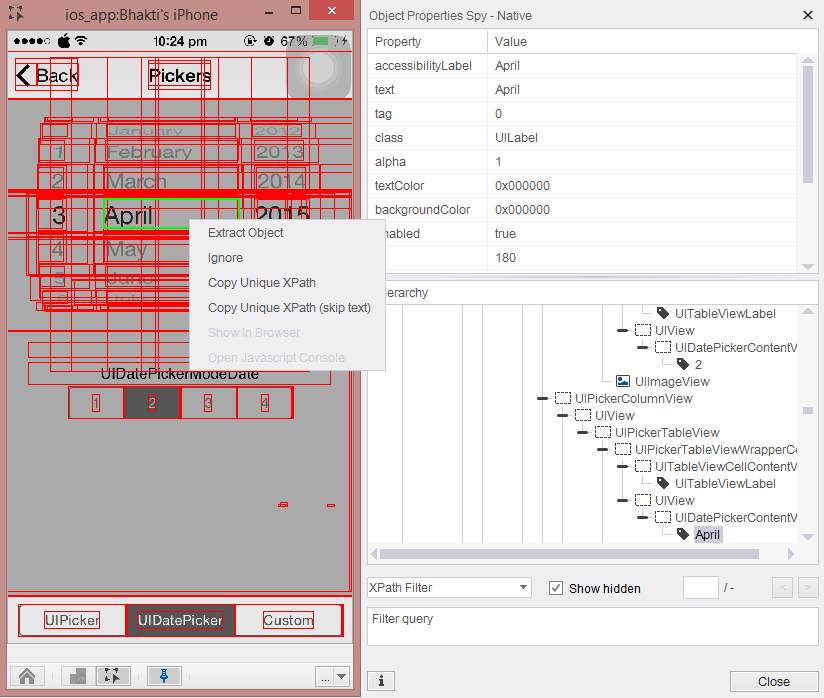
-
Click again in the same place - the picker's properties will now show up (if not, continue ignoring until you find it).
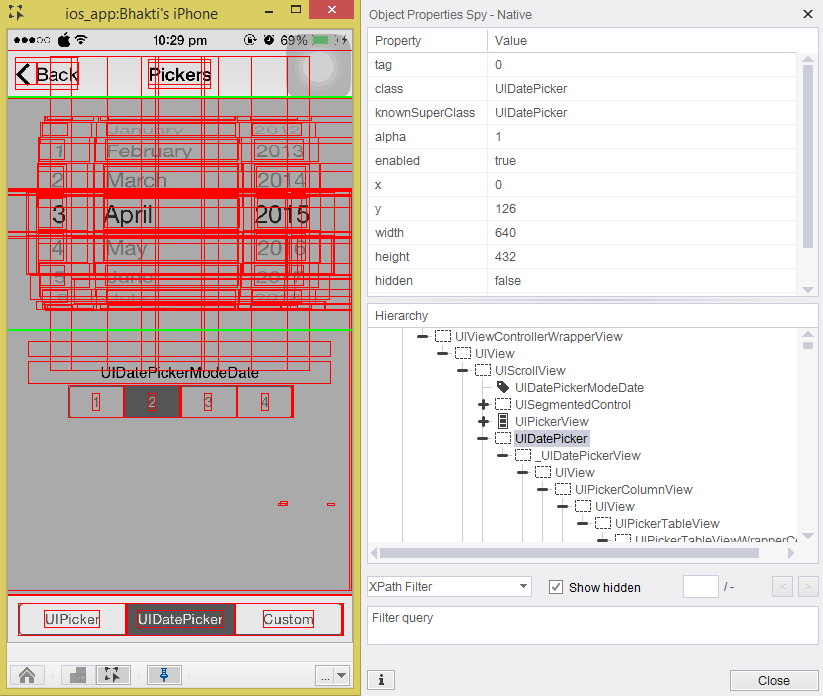
Step 2:
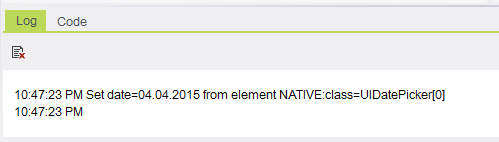
Set the command's properties to get the selected date in the picker in the format
DD/MM/YYYY.
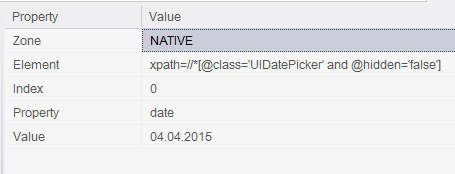
Result:
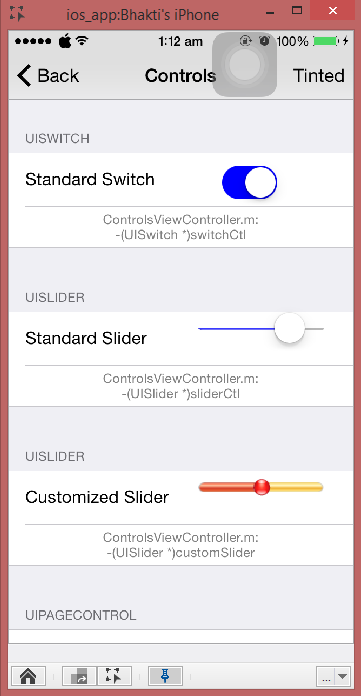
Scenario2: Sliders
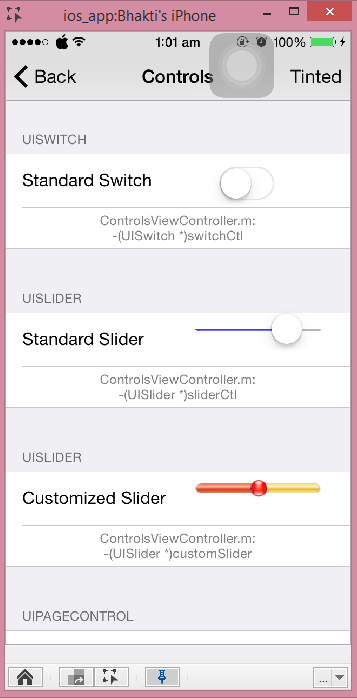
In the following example we will set the slider to a particular value using the UICatalog Test application.
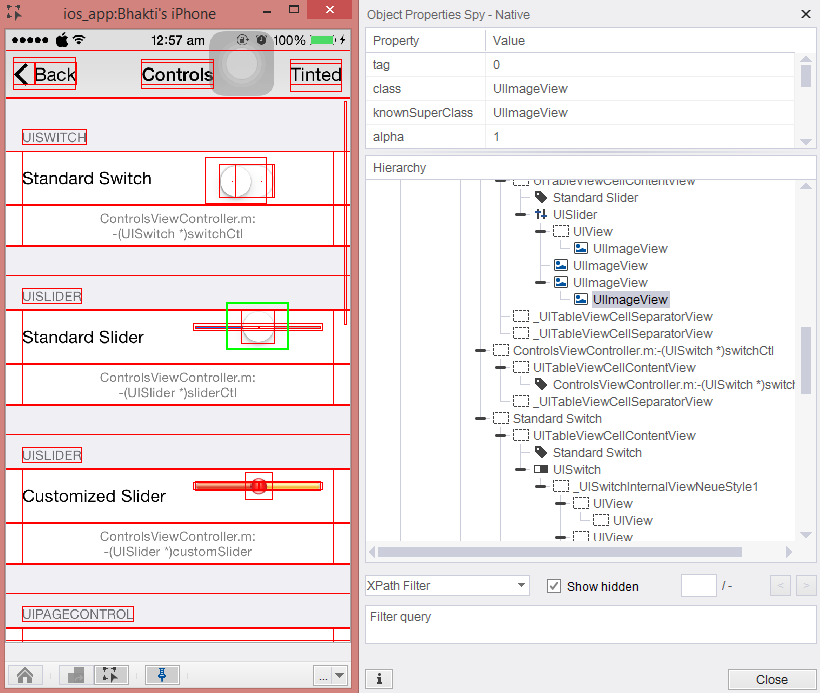
Step 1: Get the slider's Native id
How to find the picker's Native properties?
Usually it can be found behind its components properties:
-
Click on one of the picker's components.
-
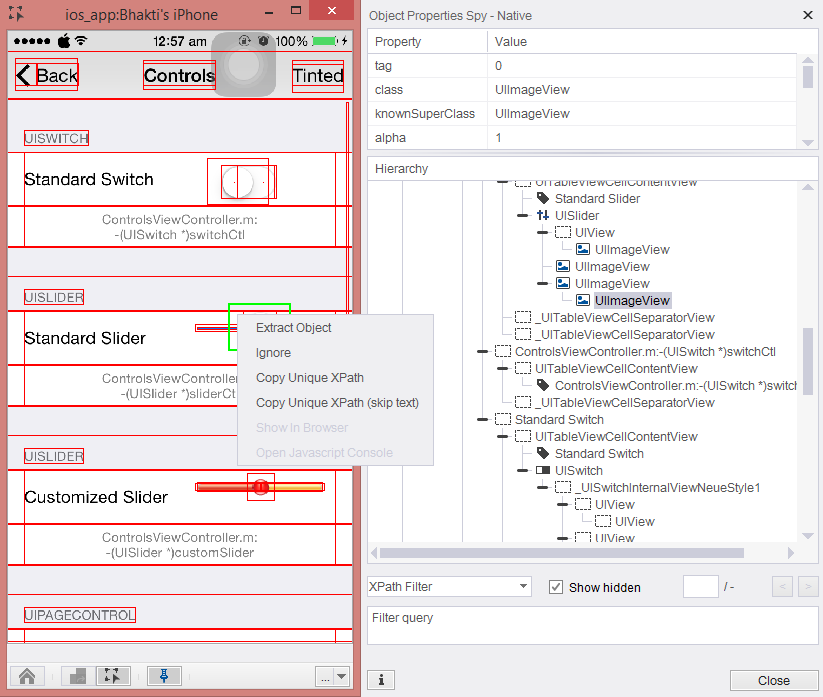
Right-click on the component then click on 'Ignore' - this will remove its properties from the screen, and will let you see what's behind it.
-
Click again in the same place - the picker's properties will now show up (if not, continue ignoring until you find it).
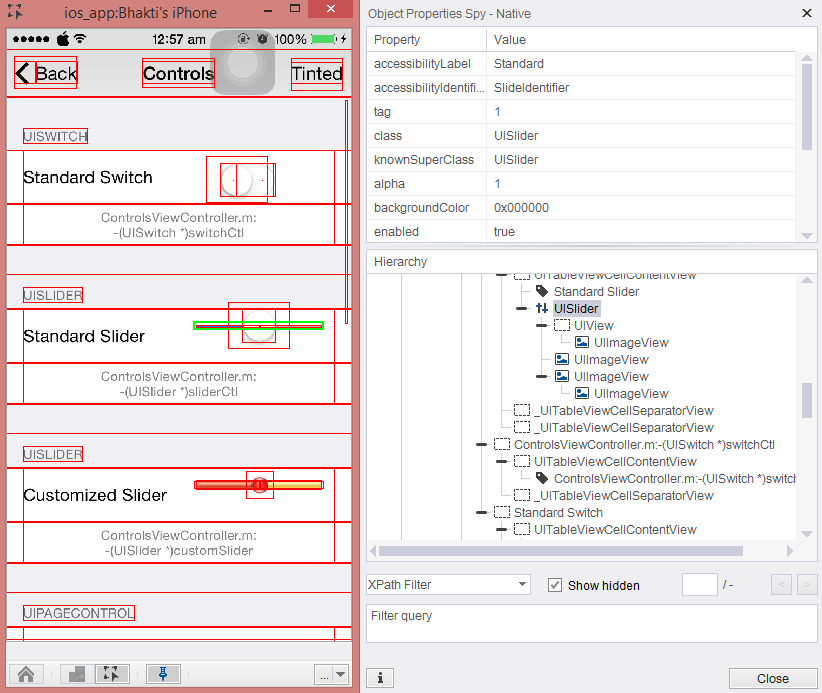
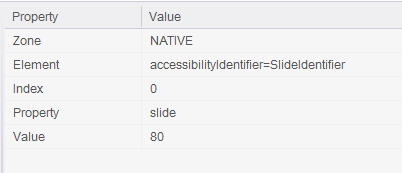
-
Set the command's properties to get the selected value in the slider in integers between 0-100.
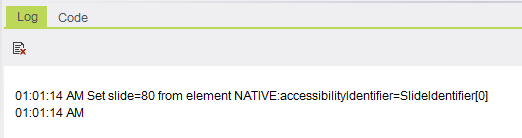
Result:
Scenario 3: Switches
In the following example we will change the state of a button using the UICatalog Test application.
Step 1: Get the button's Native id.
How to find the picker's Native properties?
Usually it can be found behind its components properties:
-
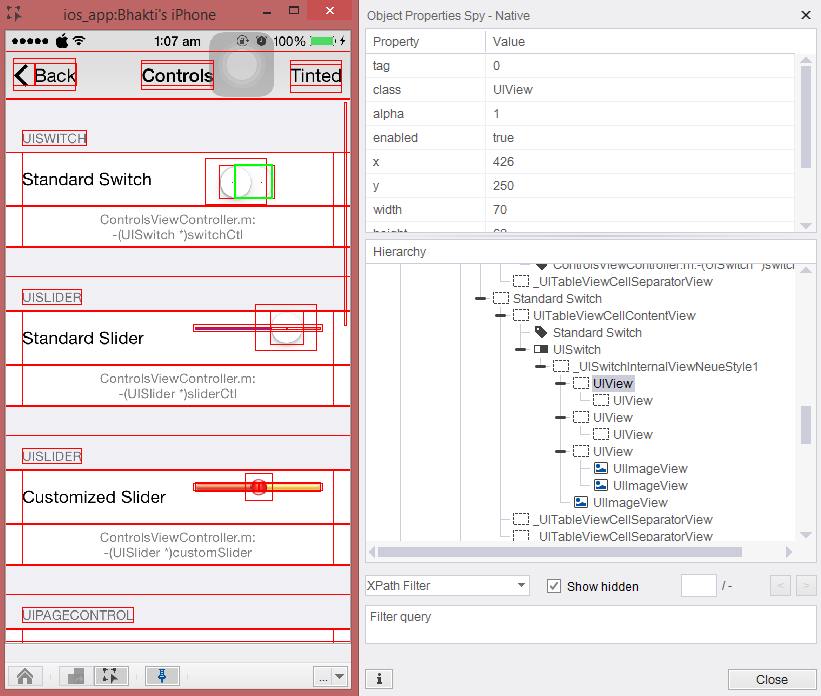
Click on one of the button's components.
-
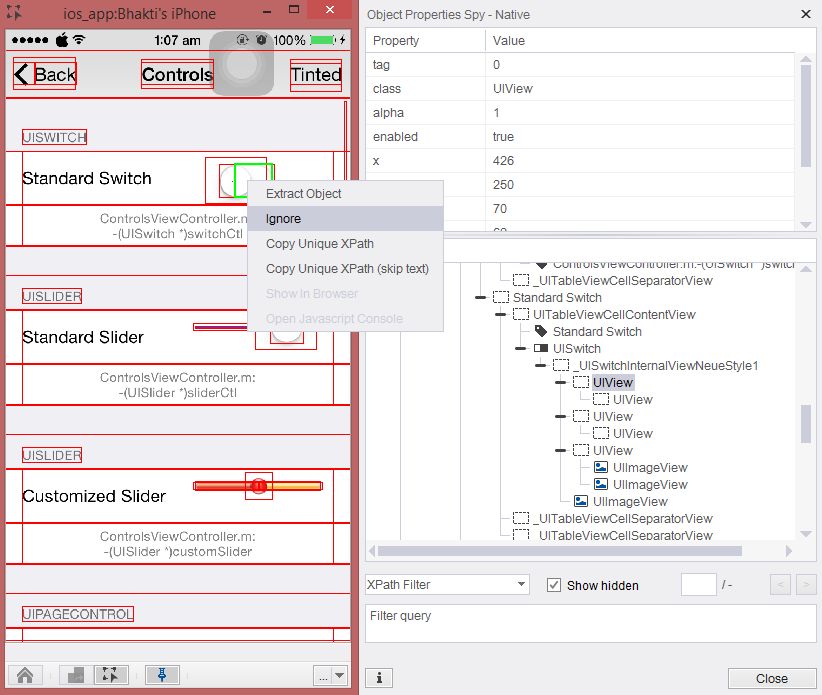
Right-click on the component then click on 'Ignore' - this will remove its properties from the screen, and will let you see what's behind it.
-
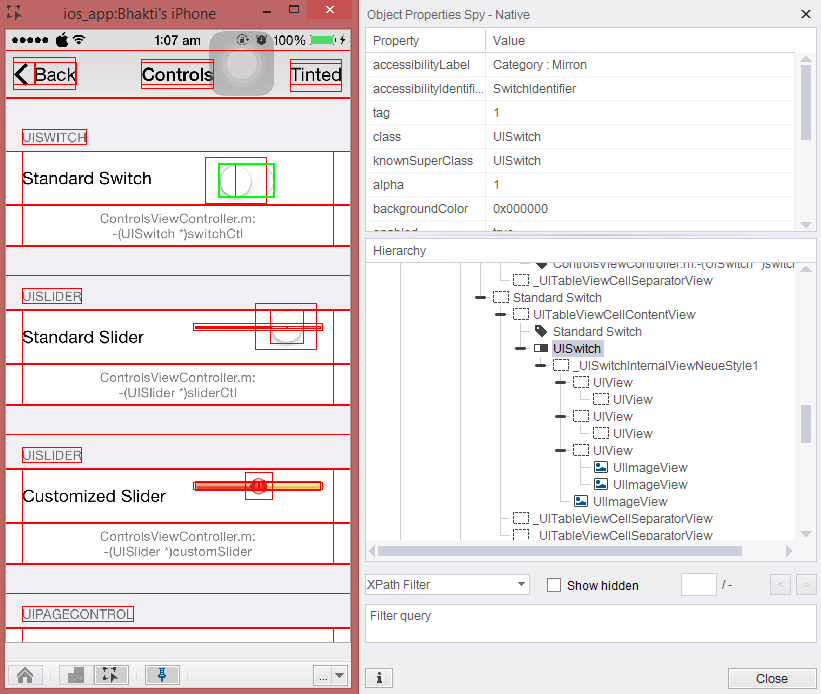
Click again in the same place - the picker's properties will now show up (if not, continue ignoring until you find it)
-
Set the command's properties to get the selected value in the switch - boolean values of true/false.
Result:
Code Examples
String str1 = client.elementSetProperty("NATIVE", "xpath=//*[@class='UIDatePicker' and @hidden='false']", 0, "date", "true");string str1 = client.ElementSetProperty("NATIVE", "xpath=//*[@class='UIDatePicker' and @hidden='false']", 0, "date", "04.04.2015");String str1 = client.elementSetProperty("NATIVE", "xpath=//*[@class='UIDatePicker' and @hidden='false']", 0, "date", "04.04.2015");Reportvar1 = self.client.elementSetProperty("NATIVE", "xpath=//*[@class='UIDatePicker' and @hidden='false']", 0, "date", "04.04.2015")my $str1 = $client->elementSetProperty("NATIVE", "xpath=//*[\@class='UIDatePicker' and \@hidden='false']", 0, "date", "04.04.2015");